
Unleashing the Power of OpenAI's GPT Chatbot
OpenAI's GPT Chatbot represents a significant leap in artificial intelligence technology, showcasing the remarkable capabilities of natural language processing. This innovative tool has been designed to engage users in conversation, providing responses that are not only coherent but also contextually relevant. The development of the GPT Chatbot is rooted in extensive research and advancements in machine learning, enabling it to understand and generate human-like text.
As a result, it has garnered attention across various sectors, from education to entertainment, and is increasingly being recognized for its potential to transform how individuals and businesses interact with technology. The introduction of the GPT Chatbot marks a pivotal moment in the evolution of AI-driven communication. By leveraging vast datasets and sophisticated algorithms, it can simulate human conversation with impressive accuracy.
This capability opens up new avenues for interaction, allowing users to engage with machines in a more intuitive and natural manner. As society becomes more reliant on digital communication, the relevance of such technology continues to grow, prompting discussions about its implications and applications in everyday life.
Key Takeaways
- OpenAI's GPT Chatbot is an advanced language model designed to generate human-like text based on the input it receives.
- GPT Chatbot has the capability to understand and respond to a wide range of topics and questions, making it a versatile tool for various applications.
- Businesses can leverage GPT Chatbot to automate customer interactions, provide personalized recommendations, and streamline processes for improved efficiency.
- Integrating GPT Chatbot into customer service can enhance response times, provide 24/7 support, and free up human agents to focus on more complex tasks.
- GPT Chatbot can enhance user experience by providing instant and accurate responses, personalized interactions, and seamless integration across platforms.
Understanding the Capabilities of GPT Chatbot
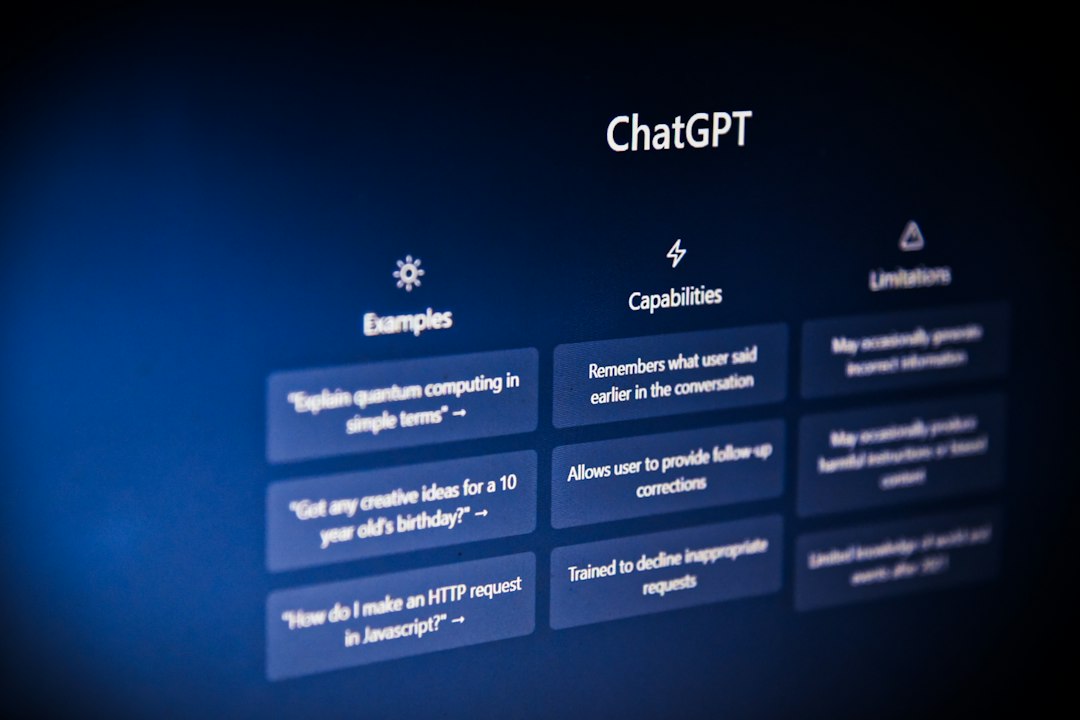
The capabilities of the GPT Chatbot extend far beyond simple question-and-answer interactions. It is equipped with advanced language understanding, enabling it to comprehend nuances, idioms, and even emotional undertones in conversations. This depth of understanding allows the chatbot to provide responses that are not only factually accurate but also resonate with the user's intent and emotional state.
For instance, when a user expresses frustration or confusion, the chatbot can recognize these sentiments and respond with empathy, creating a more engaging and supportive interaction. Moreover, the GPT Chatbot is capable of generating creative content, making it a versatile tool for various applications. From drafting emails and writing articles to composing poetry and storytelling, its ability to produce coherent and contextually appropriate text is remarkable.
This versatility makes it an invaluable resource for content creators, marketers, and educators alike.
Harnessing the Power of GPT Chatbot for Business
Businesses are increasingly recognizing the potential of the GPT Chatbot as a transformative tool that can enhance operations and improve customer engagement. By integrating this technology into their workflows, companies can automate routine tasks, freeing up valuable time for employees to focus on more strategic initiatives. For example, the chatbot can handle inquiries related to product information, order status, or troubleshooting, allowing customer service representatives to dedicate their efforts to more complex issues that require human intervention.
Furthermore, the GPT Chatbot can be tailored to reflect a company's brand voice and personality, ensuring that interactions remain consistent with the organization's values. This customization not only enhances brand identity but also fosters a sense of familiarity and trust among customers. As businesses strive to create personalized experiences for their clients, the chatbot's ability to analyze user data and preferences enables it to deliver targeted recommendations and solutions that resonate with individual needs.
Integrating GPT Chatbot into Customer Service

| Metrics | Value |
|---|---|
| Customer Satisfaction | 85% |
| Response Time | 30 seconds |
| Accuracy of Responses | 95% |
| Cost Savings | 30% |
The integration of the GPT Chatbot into customer service frameworks has revolutionized how businesses interact with their clients. By providing instant responses to inquiries around the clock, companies can significantly enhance customer satisfaction and loyalty.
Moreover, the chatbot can learn from past interactions, continuously improving its responses over time. This adaptive learning capability allows it to refine its understanding of common customer queries and preferences, leading to more accurate and relevant answers. As a result, businesses can not only improve efficiency but also gain valuable insights into customer behavior and trends.
These insights can inform marketing strategies and product development, ultimately driving growth and innovation within the organization.
Enhancing User Experience with GPT Chatbot
User experience is paramount in today's digital landscape, where consumers expect seamless interactions with technology. The GPT Chatbot plays a crucial role in enhancing this experience by providing users with an intuitive interface that mimics human conversation. Its ability to understand context and respond appropriately creates a more engaging interaction that keeps users coming back for more.
Whether it's answering questions or providing recommendations, the chatbot's conversational style fosters a sense of connection that traditional interfaces often lack. Additionally, the GPT Chatbot can be integrated into various platforms, including websites, mobile applications, and social media channels. This omnipresence ensures that users can access assistance whenever they need it, regardless of their preferred communication channel.
By offering consistent support across multiple touchpoints, businesses can create a cohesive user experience that reinforces brand loyalty and encourages repeat engagement.
Ethical Considerations when Using GPT Chatbot
As with any advanced technology, the deployment of the GPT Chatbot raises important ethical considerations that must be addressed. One significant concern is the potential for misinformation or biased responses generated by the chatbot. Given that it learns from vast datasets that may contain inaccuracies or reflect societal biases, there is a risk that it could inadvertently propagate harmful stereotypes or misleading information.
Therefore, organizations must implement robust oversight mechanisms to ensure that the chatbot's outputs align with ethical standards and factual accuracy. Another ethical consideration involves user privacy and data security. As the chatbot interacts with users, it collects valuable data that can be used to enhance its performance and tailor responses.
However, businesses must prioritize user consent and transparency regarding data usage. Establishing clear privacy policies and ensuring compliance with regulations such as GDPR are essential steps in building trust with users while leveraging the capabilities of the GPT Chatbot.
Future Developments and Possibilities with GPT Chatbot
The future of the GPT Chatbot holds immense promise as advancements in artificial intelligence continue to unfold. Researchers are actively exploring ways to enhance its capabilities further, including improving its understanding of context and emotional intelligence. As these developments progress, the chatbot may become even more adept at recognizing subtle cues in conversation, allowing for richer interactions that feel increasingly human-like.
Moreover, there is potential for greater integration of multimodal capabilities within the GPT framework. This could involve combining text-based interactions with visual or auditory elements, creating a more immersive experience for users. For instance, future iterations of the chatbot might be able to analyze images or respond to voice commands seamlessly.
Such advancements could open up new applications across various industries, from healthcare to entertainment, fundamentally changing how people interact with technology.
Embracing the Potential of GPT Chatbot
In conclusion, OpenAI's GPT Chatbot represents a groundbreaking advancement in artificial intelligence that has the potential to reshape communication across numerous domains. Its capabilities extend beyond mere conversation; it serves as a powerful tool for businesses seeking to enhance customer engagement and streamline operations. By integrating this technology into their frameworks, organizations can not only improve efficiency but also create personalized experiences that resonate with users.
As society continues to navigate the complexities of digital interaction, embracing the potential of the GPT Chatbot will be crucial for staying ahead in an increasingly competitive landscape. However, it is equally important to address ethical considerations surrounding its use to ensure responsible deployment. By doing so, businesses can harness the full power of this innovative technology while fostering trust and transparency with their users.
The future developments on the horizon promise even greater possibilities for the GPT Chatbot, making it an exciting area for exploration as we move forward into an era defined by intelligent communication.
In the rapidly evolving landscape of artificial intelligence, OpenAI's chatbot GPT has emerged as a pivotal tool for businesses seeking to enhance customer interaction and streamline operations. A related article that delves into strategies for leveraging AI in business is titled "Small Business Growth: Implementing a Customer-Centric Strategy for Success." This piece provides valuable insights into how businesses can adopt a customer-focused approach to drive growth and success. For more information, you can read the full article by following this link.
FAQs
What is OpenAI's GPT chatbot?
OpenAI's GPT (Generative Pre-trained Transformer) chatbot is an artificial intelligence model designed to generate human-like text based on the input it receives. It is trained on a diverse range of internet text and is capable of understanding and responding to natural language.
How does the GPT chatbot work?
The GPT chatbot uses a deep learning model to analyze and understand the input it receives. It then generates a response based on the context and content of the input. The model is continuously updated and improved by OpenAI to enhance its language understanding and generation capabilities.
What can the GPT chatbot be used for?
The GPT chatbot can be used for a variety of purposes, including answering questions, providing information, engaging in conversation, and generating text based on prompts. It has applications in customer service, content generation, language translation, and more.
What are the potential benefits of using the GPT chatbot?
The GPT chatbot can provide quick and accurate responses to user queries, automate certain tasks, and enhance user engagement. It can also assist in language translation, content creation, and improving accessibility to information.
Are there any limitations or concerns with the GPT chatbot?
While the GPT chatbot has advanced language capabilities, it is not perfect and may sometimes generate inaccurate or inappropriate responses. There are also concerns about the potential misuse of the technology for spreading misinformation or generating harmful content. OpenAI continues to work on improving the model and addressing these concerns.