
Unleashing the Power of AI Chat: The Smartest Conversational Technology
Artificial Intelligence (AI) chat technology has emerged as a transformative force in the realm of communication, particularly in the business sector. At its core, AI chat technology refers to the use of algorithms and machine learning to simulate human conversation.
By leveraging natural language processing (NLP), AI chat systems can understand and respond to user inquiries in a manner that feels increasingly human-like. This capability allows businesses to engage with customers in real-time, providing immediate responses to queries and enhancing overall user experience. The evolution of AI chat technology has been rapid, driven by advancements in computational power and data analytics.
Early iterations of chatbots were often limited in their functionality, relying on pre-programmed responses that could lead to frustrating interactions. However, modern AI chat systems are equipped with sophisticated learning algorithms that enable them to adapt and improve over time. They can analyze vast amounts of data to identify patterns in user behavior, allowing for more accurate and contextually relevant responses.

As a result, businesses are now able to utilize AI chat technology not only for customer service but also for marketing, sales, and even internal communications.
Key Takeaways
- AI chat technology enhances business efficiency by automating customer interactions.
- It improves customer service through faster response times and 24/7 availability.
- Successful implementation requires integration with existing systems and staff training.
- Personalization in AI chat boosts customer satisfaction by tailoring interactions.
- Ethical use of AI chat involves addressing privacy, transparency, and bias concerns.
The Benefits of AI Chat for Businesses
The integration of AI chat technology into business operations offers a multitude of benefits that can significantly enhance efficiency and productivity. One of the most notable advantages is the ability to provide 24/7 support to customers. Unlike human agents, AI chat systems do not require breaks or sleep, allowing businesses to maintain a constant presence for customer inquiries.
This round-the-clock availability can lead to increased customer satisfaction, as users can receive assistance at any time, regardless of time zones or business hours. Moreover, AI chat technology can streamline operations by automating repetitive tasks. For instance, routine inquiries such as order status checks or frequently asked questions can be handled by chatbots, freeing up human agents to focus on more complex issues that require personal attention.
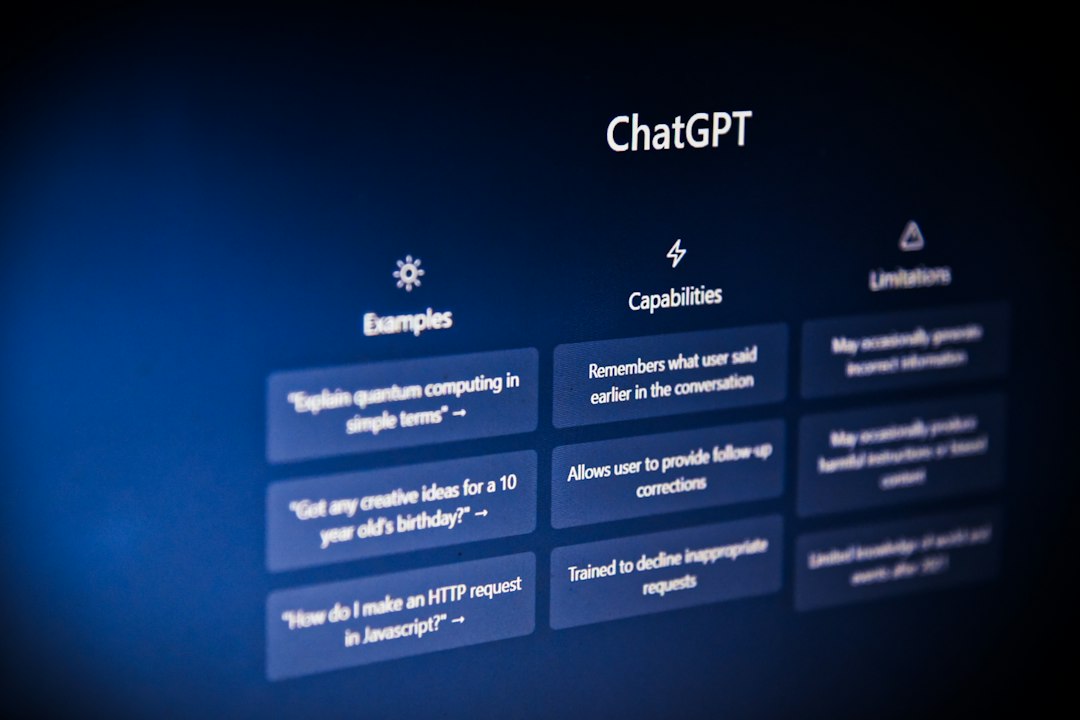
This not only optimizes resource allocation but also reduces operational costs. By minimizing the need for extensive customer service teams, businesses can allocate their budgets more effectively, investing in areas that drive growth and innovation.
How AI Chat Improves Customer Service

AI chat technology has revolutionized the way businesses approach customer service by enhancing responsiveness and personalization. With the ability to analyze customer data and previous interactions, AI chat systems can tailor responses based on individual preferences and history. This level of personalization fosters a deeper connection between the brand and the customer, as users feel understood and valued.

For example, if a customer frequently inquires about specific products or services, the AI can proactively offer relevant recommendations during future interactions. Additionally, the speed at which AI chat systems operate significantly improves the overall customer experience. Customers today expect quick resolutions to their inquiries, and AI chat technology delivers on this expectation by providing instant responses.
This immediacy not only satisfies customers but also reduces frustration associated with long wait times often experienced in traditional customer service channels. As a result, businesses that implement AI chat solutions often see an increase in customer loyalty and retention.
Implementing AI Chat in Your Business
The successful implementation of AI chat technology requires careful planning and consideration of various factors. First and foremost, businesses must identify their specific needs and objectives for utilizing AI chat systems. This involves assessing the types of inquiries that are most common among customers and determining how AI can best address these needs.
By establishing clear goals, businesses can select the appropriate technology and design a chatbot or virtual assistant that aligns with their brand voice and customer expectations. Once the objectives are defined, businesses should invest in training their AI systems with relevant data. This training process is crucial for ensuring that the AI can accurately understand and respond to user inquiries.
It may involve feeding the system with historical customer interactions, FAQs, and other pertinent information that will enhance its learning capabilities. Furthermore, ongoing monitoring and optimization are essential to maintain the effectiveness of the AI chat system. Regularly analyzing performance metrics will help businesses identify areas for improvement and ensure that the technology continues to meet evolving customer needs.
The Future of AI Chat Technology
| AI Chatbot | Developer | Release Year | Language Model | Parameters (Billion) | Key Features | Average Response Time (seconds) | Use Cases |
|---|---|---|---|---|---|---|---|
| ChatGPT | OpenAI | 2022 | GPT-3.5 / GPT-4 | 175 (GPT-3.5), 1000+ (GPT-4 estimated) | Natural language understanding, multi-turn conversation, code generation | 1.5 | Customer support, content creation, tutoring |
| Bard | 2023 | PaLM 2 | 540 | Contextual understanding, real-time information, multilingual support | 1.8 | Search enhancement, creative writing, education | |
| Claude | Anthropic | 2023 | Claude 2 | 100 | Safety-focused, ethical AI, long context handling | 2.0 | Enterprise solutions, compliance, research assistance |
| Jasper Chat | Jasper AI | 2022 | GPT-3 | 175 | Marketing content generation, tone customization | 1.7 | Marketing, copywriting, social media |
| Microsoft Bing Chat | Microsoft / OpenAI | 2023 | GPT-4 | 1000+ | Integrated search, conversational AI, image generation | 1.6 | Search, productivity, creative tasks |
As technology continues to advance at an unprecedented pace, the future of AI chat technology appears promising and full of potential. One significant trend is the increasing integration of AI with other emerging technologies such as augmented reality (AR) and virtual reality (VR). This convergence could lead to immersive customer experiences where users interact with virtual assistants in a more engaging manner.
For instance, customers might be able to visualize products in their own environment while receiving real-time assistance from an AI chat system. Moreover, advancements in machine learning algorithms are expected to enhance the conversational abilities of AI chat systems further. Future iterations may possess an even greater understanding of context, tone, and emotion, allowing for more nuanced interactions with users.
This evolution could lead to AI chat systems that not only respond accurately but also exhibit empathy and emotional intelligence—qualities that are essential for building strong customer relationships.
Overcoming Challenges with AI Chat

Despite the numerous advantages associated with AI chat technology, businesses may encounter several challenges during implementation and operation. One primary concern is ensuring that the AI system can effectively handle complex inquiries that go beyond simple FAQs. While AI has made significant strides in understanding natural language, there are still limitations when it comes to nuanced conversations or unique customer situations.
Businesses must be prepared to provide fallback options where human agents can step in when necessary. Another challenge lies in maintaining data privacy and security. As AI chat systems collect and analyze vast amounts of customer data, businesses must prioritize safeguarding this information against breaches or misuse.
Implementing robust security measures and adhering to data protection regulations is essential for building trust with customers. Transparency about how data is used and stored can also alleviate concerns and foster a positive relationship between businesses and their clientele.
Personalizing the Customer Experience with AI Chat
Personalization is a key factor in enhancing customer experience, and AI chat technology plays a pivotal role in achieving this goal. By leveraging data analytics, businesses can gain insights into individual customer preferences, behaviors, and purchase history. Armed with this information, AI chat systems can deliver tailored recommendations and responses that resonate with users on a personal level.
For instance, if a customer frequently purchases fitness products, the AI can suggest related items or provide personalized workout tips during interactions. Furthermore, personalization extends beyond product recommendations; it encompasses the overall tone and style of communication as well. Businesses can program their AI chat systems to adopt a friendly or formal tone based on the customer's profile or previous interactions.
This adaptability creates a more engaging experience for users, making them feel valued and understood by the brand.
Ethical Considerations with AI Chat Technology
As businesses increasingly adopt AI chat technology, ethical considerations must be at the forefront of discussions surrounding its implementation. One significant concern is the potential for bias within AI algorithms. If not carefully monitored, these systems may inadvertently perpetuate existing biases present in training data, leading to unfair treatment of certain customer groups.
Businesses must prioritize diversity in their training datasets and continuously evaluate their AI systems for any signs of bias. Additionally, transparency is crucial when it comes to informing customers about their interactions with AI chat systems. Users should be made aware when they are communicating with an AI rather than a human agent.
This transparency fosters trust and allows customers to make informed decisions about their interactions with the brand. By addressing these ethical considerations proactively, businesses can ensure that their use of AI chat technology aligns with societal values while delivering exceptional customer experiences.
In the ever-evolving landscape of artificial intelligence, the development of the smartest AI chat systems has become a focal point for businesses looking to enhance customer engagement. A related article that delves into the importance of understanding customer needs and implementing effective strategies is available at Implementing a Customer-Centric Strategy for Success. This piece highlights how a customer-centric approach can significantly impact small business growth, making it essential reading for those interested in leveraging AI chat technologies to improve customer interactions.
FAQs
What is considered the smartest AI chat?
The smartest AI chat refers to advanced conversational agents that use state-of-the-art natural language processing and machine learning techniques to understand and generate human-like responses. Examples include models like OpenAI's GPT series, Google's LaMDA, and others.
How do AI chatbots become smart?
AI chatbots become smart by being trained on vast amounts of text data, learning language patterns, context, and knowledge. They use deep learning algorithms, particularly transformer architectures, to generate coherent and contextually relevant responses.
What are common uses of the smartest AI chatbots?
Smart AI chatbots are used in customer service, virtual assistants, education, content creation, language translation, and entertainment. They help automate tasks, provide information, and engage users in natural conversations.
Are the smartest AI chatbots capable of understanding emotions?
While AI chatbots can recognize and respond to emotional cues in text to some extent, they do not truly understand emotions as humans do. Their responses are based on patterns learned during training rather than genuine emotional comprehension.
Can the smartest AI chatbots learn from conversations in real-time?
Most advanced AI chatbots do not learn from individual user interactions in real-time due to privacy and safety concerns. However, developers may use aggregated and anonymized data to improve models over time.
What are the limitations of the smartest AI chatbots?
Limitations include occasional generation of incorrect or nonsensical answers, lack of true understanding or consciousness, potential biases inherited from training data, and challenges in handling ambiguous or highly specialized queries.
How is the smartest AI chat different from traditional chatbots?
The smartest AI chatbots use deep learning and large-scale language models to generate more natural, context-aware, and diverse responses, whereas traditional chatbots often rely on rule-based systems or scripted responses with limited flexibility.
Is the smartest AI chat safe to use?
While developers implement safety measures, AI chatbots can sometimes produce inappropriate or biased content. Users should exercise caution and avoid sharing sensitive personal information during interactions.
How can businesses benefit from the smartest AI chatbots?
Businesses can improve customer engagement, reduce response times, automate routine inquiries, and provide 24/7 support by integrating smart AI chatbots into their communication channels.
What future developments are expected in the smartest AI chat technology?
Future developments may include better contextual understanding, improved emotional intelligence, multimodal capabilities (combining text, voice, and images), enhanced personalization, and stronger safeguards against misuse.